It's OK to fail, you won't improve without it
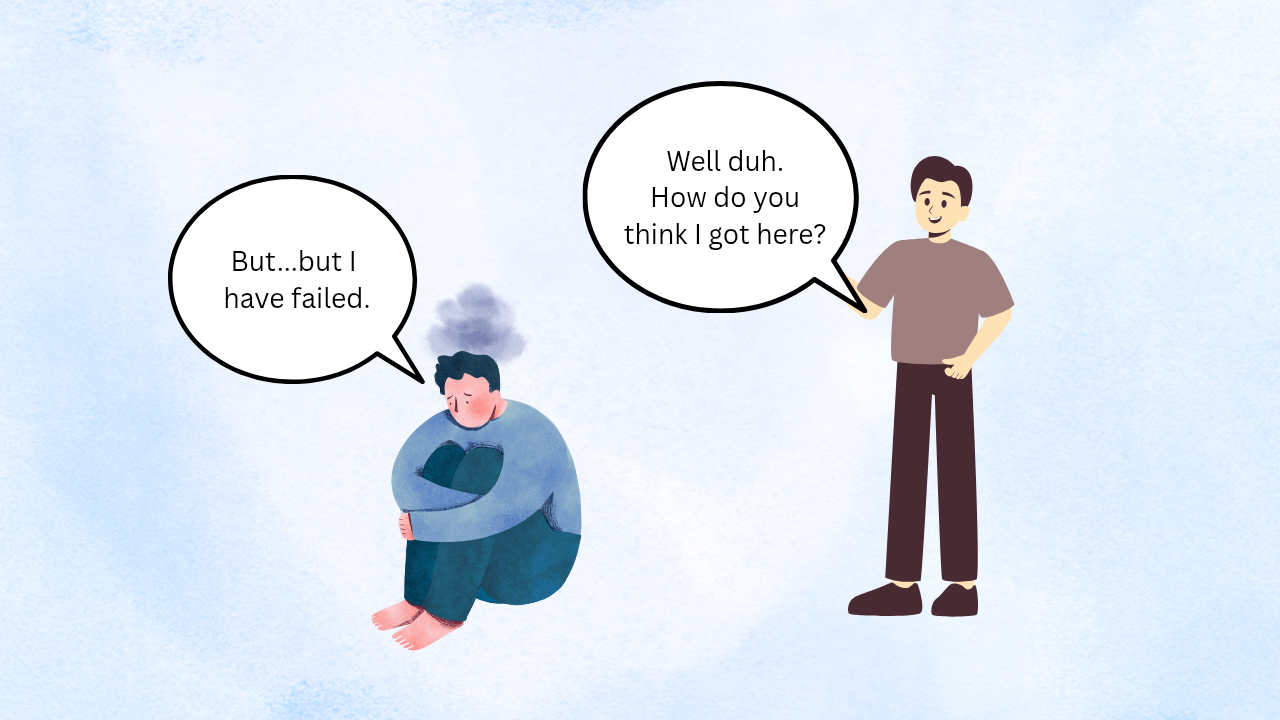
Failure is a natural and necessary part of growth. Even the biggest winner you know has failed more times than you have tried. Reframing mistakes to see them as learning points rather than setbacks to your progress is crucial to ensure you can overcome fear, reduce hesitation, try new things, and most importantly, keep improving.
MINDSET
3/15/20262 min read
"I have not failed, I've just found 10,000 ways that won't work." - Thomas Edison
Our brains are wired in a way that the more you do something, the closer you get to the desired outcome. This is because as you repeatedly indulge in a particular activity, your brain is slowly, but surely, narrowing down outcomes until you have nothing but the right way.
As the brain narrows down the outcomes, the chance of finding the right way increases as the brain subconsciously avoids/discards methods that lead to undesired outcomes.
Your brain is essentially saying 'Ah that didn't work, I won't do that again' a bunch of times until it finds the way that works.
This is also why it's very common to hear music artists speak about having thousands of songs that didn't make the cut for a full release.
Given the above, in our pursuit to master a particular activity, skill, trade, etc., we must clear out enough of the wrong ways of doing it so that the right way becomes clear. Think of it like having to remove straws of hay until you're able to see the needle in the haystack, or cutting through branches to find the valley.
Take this moment to think about anything you're good at in life. You might notice that one of the key factors in play has been due to the fact that you just did it a bunch of times (with a mix of failing and small successes) until you started to get good at it. Essentially, you wouldn't be good at anything if it wasn't for all the times you were bad at it.
I also believe that the amount of times you have to fail at something before you're consistently good at it is proportional to how difficult it is to master. This is why you have to fail much less in order to master screwing in light bulbs, for example, as opposed to being an F1 driver.
Now with all that's been said, this is not to say that getting good/to the right way is simply a case of doing the same thing over and over again until you do. We still have to ensure that we're in a constant state of reviewing how we should be improving and learning from these repetitions of failure spoken about throughout this article. This helps prevent us from running into a 'practice makes permanent' way of doing things the wrong way.
So next time you fail, just remember that success is built upon a mountain of failures.
Never Miss a Post
Simple, effective advice straight to your inbox
(I never spam)
© 2025 - 2026 Didn't Ask. All rights reserved